An automated driving range: what 100% autonomous solutions are there in the USA with ECHO Robotics?
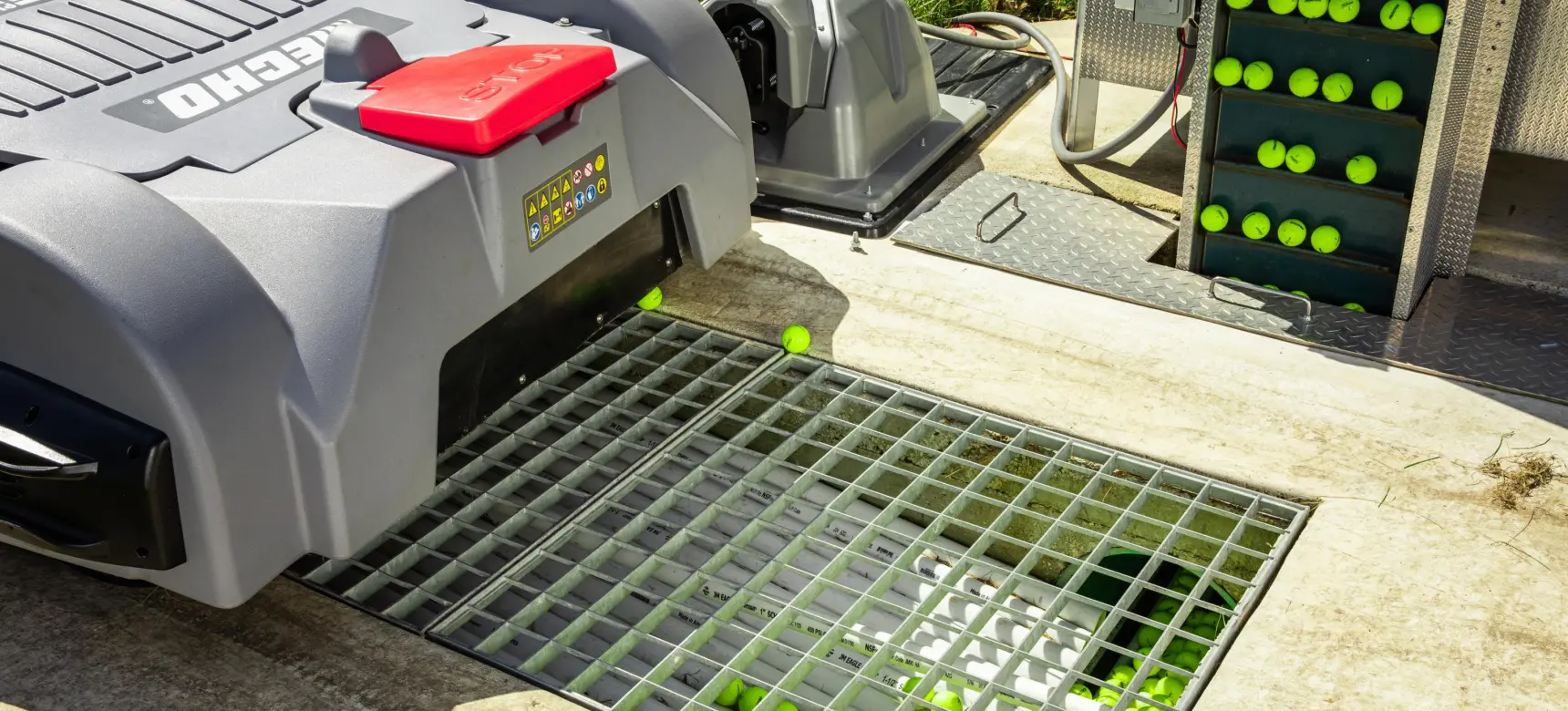
Automating a driving range is no longer a futuristic option in the USA; it's an operational reality. With the professional robots developed by ECHO Robotics and thanks to our partners, mowing, ball picking, ball cleaning and redeployment can now take place without human intervention.
The aim is to guarantee constant service quality, reduce operating costs, and improve the environmental performance of a golf course.
Why automate a driving range?
1. In response to labour shortages
Golf courses are facing a scarcity of technical personnel, particularly for repetitive tasks such as manual ball collection.
An automatic system provides:
- Continuous ball collection, with a robotic ball picker,
- Uninterrupted refilling of the dispensers,
- Early morning, late night, and weekend operation.
ECHO Robotics professional mowing robots operate completely autonomously, with controlled energy consumption (up to approximately 830 kWh/year, according to the model), whilst ensuring continuous coverage of the grounds.
2. Improving the grass quality and the player experience
An automated driving range guarantees:
- regular, precise mowing thanks to GPS-RTK guidance,
- a dense lawn, promoted by frequent mulching,
- a clean surface at all times thanks to autonomous collection.
Robotic mowing maintains the surface without damaging balls, whilst the ball picking robot concentrates its cycles on high-density areas before automatically taking the balls to the drop pit.
Result: continuous ball availability and optimum quality of play.
3. Reducing the environmental footprint
Electric automation provides:
- up to 10 times less CO₂ emissions compared to internal combustion systems,
- reduced noise (around 58 dB(A) according to the configuration),
- significantly reduced fuel consumption.
For golf clubs undertaking ESG initiatives or seeking environmental certification, this is a strong strategic lever.
Operating an automated driving range: robots, washing, conveying
An autonomous driving range is based on an integrated chain:
- Robotic mowing
- Automatic ball collection
- Automatic drop-off in a dedicated area
- Washing and drying
- Transportation to the dispenser
- Storage and redistribution
ECHO Robotics robots handle the first part of the cycle:
- TurfMow: high-precision autonomous mowing using GPS-RTK.
- RangePicker: collects balls autonomously without damaging them.
Once the 350-ball capacity tank is full, the RangePicker pours the balls out into a dedicated drop-off area.
The management system then takes over to wash and dry the balls and convey them to the dispenser automatically.
This makes the whole flow fully autonomous.
How do you plan for the automation of your driving range?
1. Daily ball volume
A high-traffic driving range (urban clubs, academies, resorts) requires:
- a large-capacity drop pit,
- a high-performance washing system,
- a fast conveyor system.
A golf course with moderate traffic, on the other hand, can choose a compact solution on the ground.
2. Site configuration
Key parameters:
- distance between the drop pit and the ball dispenser,
- topography,
- available space for a buried or above-ground installation.
3. Desired level of automation
There are two possible approaches:
- immediate full automation,
- gradual deployment in add-on modules.
4. Monitoring and management tools
Some installations include:
- automatic ball counting,
- tracking the volumes collected,
- remote monitoring.
This data facilitates the operational and budgetary management of the practice.
5. Noise and environmental constraints
For driving ranges located:
- near residential properties,
- in tourist areas,
- or with extended opening hours,
the silent electric operation is a decisive advantage.
Solutions compatible with ECHO Robotics
Several manufacturers are developing complementary systems that are compatible with the ECHO Robotics ecosystem:
AOS - Automated Outdoor Solutions (United States)
The AOS Ballwash and Transportation System automatically transports, cleans, and delivers golf balls back to the dispenser after collection. The result is a seamless workflow that reduces labor, improves efficiency, and ensures golfers always have access to clean balls.
>
Discover AOS
Range Servant – Golf Ball Ditch (Sweden)
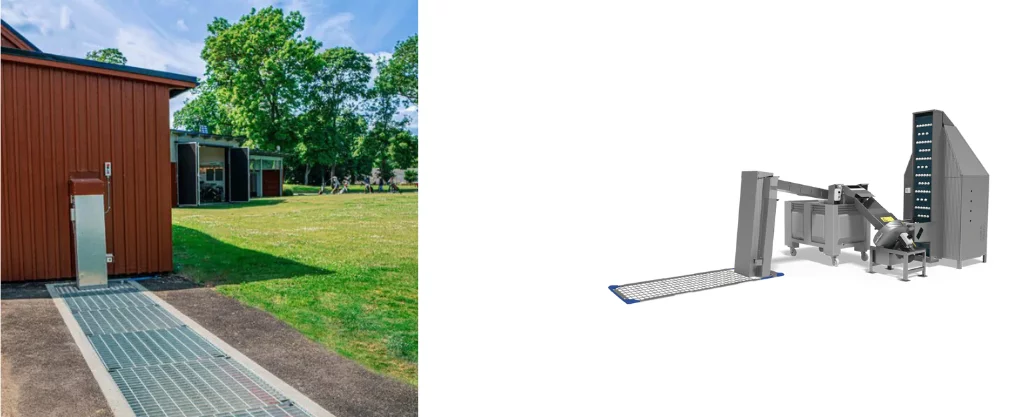
The system automatically transports balls from a collection ditch to washers, storage hoppers, and dispensers, ensuring a continuous supply of clean balls. Designed for facilities of all sizes, it helps reduce labor, improve efficiency, and create a smoother driving range operation.
Discover Range Servant
Natural integration with ECHO Robotics robots
The ecosystem allows the automation of the whole cycle:
- continuous lawn maintenance,
- collection without human intervention,
- optimised ball flow management,
- continuous operation of the driving range.
Integration remains modular, avoiding complicated installation whilst allowing a gradual increase in capacity.
Contact‑us for a free estimate for your driving range.
FAQ – Automated driving range
Are the solutions fully compatible with ECHO Robotics robots?
Yes. The manufacturers design their drop pits and processing systems for smooth integration with TurfMow and RangePicker equipment.
Does automation damage the balls?
No. The robots use protection systems that limit impacts. The washing and transportation modules are designed to reduce mechanical impacts and promote long ball life.
What is the overall energy impact?
The system is fully electric. Energy consumption is controlled, with significantly reduced emissions and noise compared to conventional internal combustion systems.
How are the balls cleaned?
According to the manufacturer:
- they are washed and brushed with water,
- carried by negative pressure with integrated rinsing,
- hydraulic conveyor system to clean and carry the golf balls simultaneously.
The aim is always to minimise water consumption whilst ensuring effective cleaning.
Is an automated driving range noisy?
No. The mowing and ball picking robots operate at a low noise level, allowing prolonged use without disturbing players or local residents. The technical systems are restricted to specific areas.
Is the RangePicker compatible with synthetic grass?
Absolutely. Many driving ranges have chosen synthetic grass, and the RangePicker works just as well on that type of surface as it does on natural grass. Lightweight, unobtrusive and silent, it won't damage the turf or the balls. It moves without leaving tracks or burying balls.
What is the collection capacity of the RangePicker?
The RangePicker can collect up to 350 balls per cycle, without ever interrupting play or disturbing the players. This corresponds to a collection capacity of 15,000 balls per 24-hour period. No more need to manage collection manually: the robot takes over.
Your teams will be free to perform tasks with higher added value.
Can impact by golf balls damage the RangePicker?
No. With their high-density polyethylene shell, ECHO Robotics robots withstand golf ball impacts whilst remaining lightweight to avoid causing soil compaction. Players can even use the robots as moving targets to work on their accuracy!